
The Real Expense of ‘Fine’
Feb 09, 2026The late night hum of your laptop. The unread WhatsApp from someone you love. The moment you ask your team if they’re okay, knowing you’re not.
You’ve mastered the art of looking fine. Which is precisely why no one sees what it’s costing you.
Burnout rarely screams. It shows up as competence. It wears punctuality, high functioning, and a well-managed calendar. It sits quietly behind the smile that says “I’ve got this,” even when part of you knows you don’t.
And because you seem fine, the world keeps asking for more. You keep giving until you can’t.
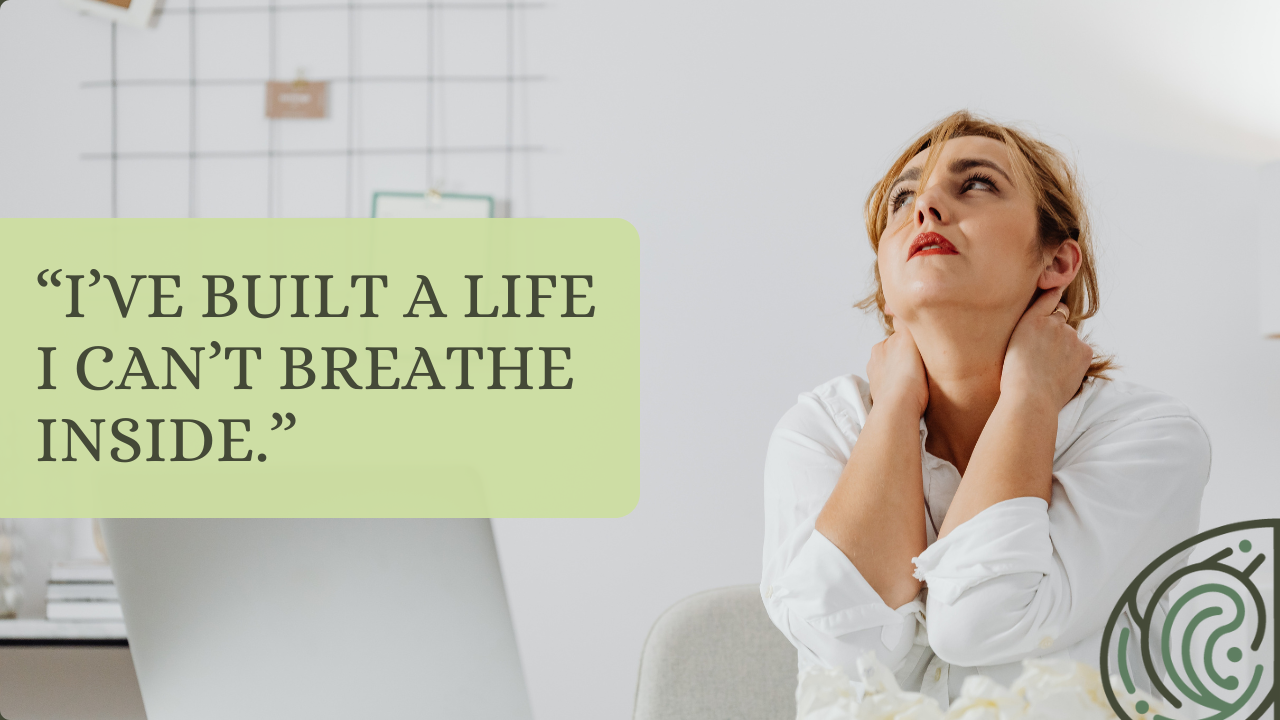
Claire looked fine, too. Senior HR lead. Fierce on paper. Responsive to a fault. First thing she said when we started working together?
“I’ve built a life I can’t breathe inside.”
There was no breakdown. No dramatic shift. Just small, steady changes that gave her room to exhale.
That’s how these things begin. Not with fireworks. With friction removed.
You don’t have to fall apart to justify recalibrating.
But most people wait. They wait until they’re depleted. They wait for permission. They wait until they’re so deep into the performance of “fine” that they don’t know where it ends and they begin.
I don’t think they’re weak. I think they’ve just been trained to see rest as indulgence. Emotion as a threat. Support is something other people need.
But your nervous system doesn’t care about your job title. It doesn’t care that you hit your Q3 goals or showed up to every single thing you were supposed to. It cares that you haven’t been home to yourself in months.
Burnout is rarely about hours worked. It’s about how often you override yourself. How often do you know something isn’t right and do it anyway?
You don’t fix that by quitting everything. You fix it by listening earlier, by pausing when the first signs whisper, not when they finally roar.
That’s why I work the way I do. No generic “how are you” loops. No mood trackers. No gimmicks.
Just honest, steady recalibration. One nervous system at a time. The most powerful people I know aren’t the ones who grind the hardest, they’re the ones who’ve learned how to protect their own bandwidth.
And that kind of influence? It starts inside.
So maybe the question isn’t: “Can I keep doing it all?”
Maybe it’s:
“What’s the real cost of performing okay when I’m not?”
Because you already know how to power through. You already know how to carry things that aren’t yours. You already know how to make other people feel safe, even when you don’t.
The harder skill, the rarer authority, is learning how to make yourself safe. How to stop leaking energy. How to stop apologising for needing space. How to build structure around your sanity, not just your output.
That starts smaller than most people think.
Sometimes it’s a 20 minute window on your calendar that no one sees but you. Sometimes it’s one sentence said out loud for the first time. Sometimes it’s just letting the mask drop, even in the privacy of your own mind and saying, “I’m tired of this.”
And when you say that, not in anger, but in clarity, something shifts.
It’s not loud. It doesn’t need to be. It’s the moment the performance ends, and the recalibration begins.
If this felt familiar, not just the words, but the weight behind them, then you already know. Your version of “fine” is getting too expensive.
What would it feel like to sit down for 20 minutes… No mask. No judgement. No pressure to explain.
Just someone who sees what’s behind the smile and knows what to do with it.
DM me “READY.” We’ll start with that one conversation. The one that doesn’t ask you to prove anything.
Not for everyone.
Just for those who’ve realised: performing okay is no longer the goal. Feeling steady, even quietly, is the real power.
